The First AI-Driven Exit of a Tech Giant CEO: Where Does Executive Leadership Go From Here?
The post examines Adobe’s CEO departure, highlighting how slow AI adoption, outdated pricing models, and ethical lapses are forcing top executives to adapt quickly or risk losing relevance in the AI‑driven SaaS landscape.

A brutal wave of layoffs is sweeping through the modern business battlefield—but this time, the ones being "let go" are the CEOs with illustrious track records.
On March 12, Adobe CEO Shantanu Narayen announced he would officially step down once a successor is found. From a financial perspective, his performance was nearly flawless: revenue grew by 12%, and cash flow hit record highs. Nevertheless, Wall Street felt Narayen’s pace in AI was simply too slow. Driven by a perceived lag in AI transformation and the underwhelming performance of Firefly, Adobe’s stock plummeted 38%. Ultimately, even this veteran helmsman could not withstand the tidal wave of the AI era.
Narayen’s departure sends a clear signal: when a generational technology shift occurs, past achievements are no longer an executive’s shield. In the midst of this "SaaS Apocalypse," AI is redefining the standards of executive competency. Decision-makers are now facing three critical battles.
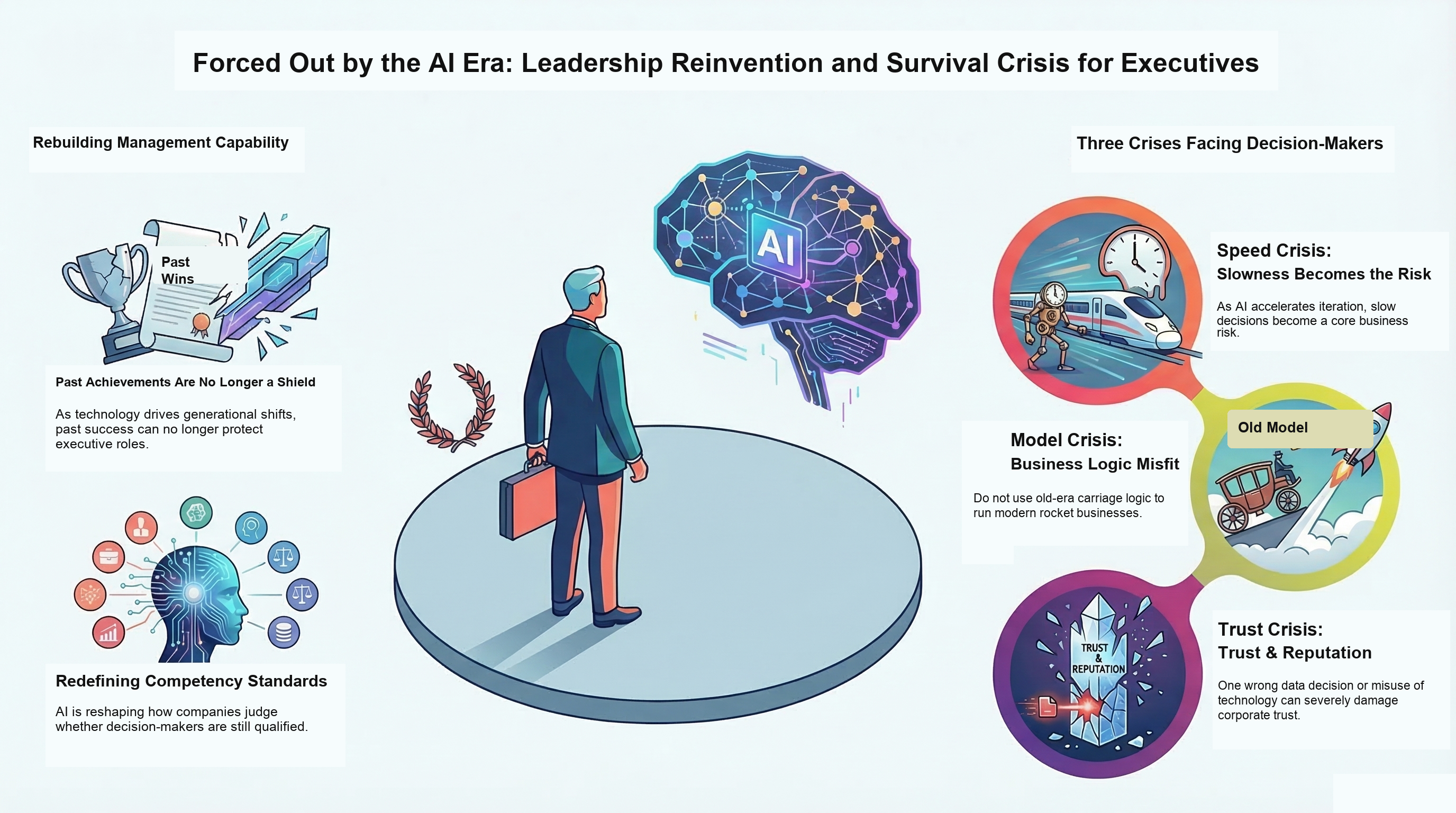
1. The Velocity Crisis: In the AI Era, "Slow" is the Ultimate Sin
It’s not that Narayen didn’t try. He made AI a core strategy, personally oversaw the self-developed platform Firefly, and keenly bet on AI-driven search as a vital traffic entry point. Firefly initially carved out a niche in the arms race with its "commercially safe/legally authorized training" label.
Continue reading
All posts

Turn this into a real skill.
Our EliteClasses take what you read here and put it into your weekly workflow.

